FedCFO Search Engine

@FedCFO Twitter Feed

Showing posts with label CFO Act. Show all posts

Thursday, June 22, 2017

Key Financial Management Positions Lack Nominees

 
The Washington Post and Partnership for Public Service, a nonprofit, nonpartisan organization, are tracking more than 500 key executive branch nominations through the confirmation process. These positions include Cabinet secretaries, deputy and assistant secretaries, chief financial officers, general counsel, heads of agencies, ambassadors and other critical leadership positions. These are a portion of the roughly 1,200 positions that require Senate confirmation.

The Senate can only act on nominations that have been formally submitted by the Trump administration.

There are several agencies lacking nominees for key financial management positions as listed below.
 
Agencies without a nominee for Chief Financial Officer:
  • Department of State
  • Department of Agriculture
  • Department of Commerce
  • Department of Education
  • Department of Energy
  • Department of Homeland Security
  • Department of Housing and Urban Development
  • Department of Labor
  • Department of Transportation
  • Department of Veterans Affairs
  • Department of the Treasury
  • Environmental Protection Agency
  • National Aeronautics and Space Administration
Agencies without a nominee for Inspector General:
  • Department of Defense
  • Department of Energy
  • Department of the Interior
  • Central Intelligence Agency
  • Small Business Administration
  • Export-Import Bank
  • Office of Personnel Management
  • Social Security Administration


Sunday, November 15, 2015

FY2015 US Federal Financial Statement Audit Due Monday

The audited financial statements of the 24 CFO Act agencies and participating federal organizations & commissions are due to be published on Monday November 16, 2015.

The following urls provide starting points to locate the publications.

http://www.performance.gov/
http://www.gao.gov/key_issues/federal_financial_accountability/issue_summary
http://www.treasury.gov/about/budget-performance/annual-performance-plan/Pages/default.aspx
@FedCFO


Wednesday, September 10, 2014

GAO released the revised Green Book, standards to help agencies achieve goals and safeguard resources

Internal control helps an entity run its operations efficiently and effectively, report reliable information about its operations, and comply with applicable laws and regulations. The Standards for Internal Control in the Federal Government, known as the "Green Book," sets the standards for an effective internal control system for federal agencies.

2014 Green Book Overview 

2014 Green Book

Friday, August 01, 2014

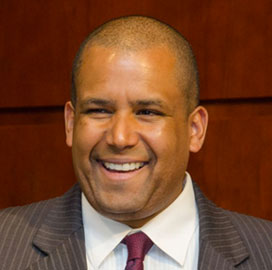
DOT Official Brodi Fontenot Nominated as Treasury Dept CFO

Brodi Fontenot, currently a Transportation Department official, has received a presidential nomination to serve as the Treasury Department‘s next chief financial officer, the White House announced Thursday.

Fontenot’s roles at DOT include assistant secretary for administration, chief human capital officer and senior sustainability officer.

He joined that agency in 2009 as deputy assistant secretary of management and budget after serving on the Senate Budget Committee’s staff for three years.

Between 2001 and 2006, he worked as a Government Accountability Office analyst and helped the agency with budgeting, disaster assistance and housing matters.

He holds a master of public administration degree from the University of North Carolina and a bachelor’s degree from the University of Houston.

-Mary-Louise Hoffman, ExecutiveGov.com
READ MORE...

Thursday, May 22, 2014

Treasury official calls for quick Data Act demos

The three-year schedule to implement the Digital Accountability and Transparency Act, a measure that puts federal financial data on a single, machine-readable standard and requires its publication to the public online, might be too ambitious, said Dick Gregg, fiscal assistant secretary of the Treasury and the executive in charge of implementing the law.

"It will be difficult and maybe impossible in some areas to hit all the timelines," Gregg said on May 20 at the Federal Financial Management Conference in Washington, D.C., before an audience of government accountants and financial managers who will be on the front lines of implementing the changes required under the Data Act.
The challenge is for Treasury and the Office of Management and Budget to come up with a standard for publishing financial data, then convert federal financial management systems to that standard. There was no money included in the law to finance the effort, but agencies will surely need some resources to implement changes.
"I'm not sure what the approach of OMB will be when agencies make requests," Gregg said. "There will be some costs. It's important to work together to figure out how to minimize the cost of doing this." One way is to leverage gains made in the Treasury's own internal goal of improving financial transparency through the management of the USASpending.gov website, which recently moved to Treasury from OMB as part of the fiscal 2014 budget.
The shift to a federal-first approach to agency financial management could help streamline the process, Gregg pointed out. "Shared services is a force multiplier," Gregg said, because consolidation of financial management at the four providers means that agencies will be able to outsource some of their compliance. "The sooner we can move more agencies into shared services, the easier it's going to be for them to implement the Data Act," Gregg said.
The financial management community will reap the benefits as well, Gregg said. The new emphasis on standardization means that chief financial officers can shift from systems implementation and operation to the more interesting and rewarding work of managing programs.
-Adam Mazmanian, FCW.com
READ MORE...

Friday, May 02, 2014

Obama to nominate long-time former fed to be OMB controller

President Barack Obama intends to nominate David Mader to be the controller of the Office of Management and Budget.

The White House announced the President's plans to tap Mader, a senior vice president for strategy and organization at Booz Allen Hamilton, to return to government. It was one of several management positions announced Thursday.

Mader would replace Danny Werfel, who served as controller of OMB for four years and left last fall to take over the IRS as acting commissioner.

The irony of Mader's potential nomination is he worked at the IRS for 32 years, rising to senior executive levels including acting deputy commissioner, acting deputy commissioner for modernization and chief information officer, assistant deputy commissioner and chief for management and finance before leaving government.

Since he retired in 2003, Mader worked at Booz Allen for most of his post government career.

Mader should be well known around OMB, which is one of his many Booz Allen clients. According to the company's website, Mader works with several agencies, including the Department of Treasury, Office of Personnel Management, the General Services Administration and the Government Accountability Office. He provides an assortment of consultant services, from organizational transformation to financial management to strategic community to performance management.

Mader's nomination is a bit of a departure for the White House in that it's choosing someone with decades of federal experience, though still from the ranks of a consultant. Typically, the administration has chosen senior OMB political appointees with limited or no real federal experience.

Monday, March 24, 2014

Former interim IRS chief lands private sector gig

Danny Werfel, the interim IRS commissioner for much of 2013, has landed at the Boston Consulting Group, the firm announced Monday.
Werfel held down one of the more thankless positions in the federal government last year, working to put the IRS on firmer footing after the agency was rocked by controversy over the improper scrutiny given to Tea Party groups.

Werfel said he would explore private-sector opportunities when he left the IRS several months ago, after the Senate confirmed his replacement, John Koskinen.

-Bernie Becker, TheHill.com
READ MORE...

Monday, December 02, 2013

Financial management and freedom of choice

At a time when governments are increasingly looking to private-sector solutions to improve efficiency and solve complex challenges, the Treasury Department appears to be headed in the opposite direction when it comes to shared services, with potentially disastrous results.
In April, the CIO Council published the Federal Shared Services Implementation Guide, which establishes a strategy for moving agencies to shared-services environments for business areas such as budget formulation, human resources and, notably, financial management. Charged by the Obama administration with developing an implementation strategy, Treasury's Office of Financial Innovation and Transformation (FIT) developed a plan to streamline and consolidate financial management systems by tapping federal shared service providers (FSSPs) almost exclusively.
Although consolidation might be a good idea, major concerns exist about the viability of the chosen approach.
Representatives from the Software and Information Industry Association and its member companies met with Office of Management and Budget and FIT officials to understand how their effort would improve upon previous attempts, such as the Lines of Business initiative, which ultimately failed in 2006. So far, however, those conversations have led to more questions than answers, particularly concerning the role of commercial providers in the new shared-services arrangement.
Consolidation is a noble goal but not when it flies in the face of efficiency and rationality.
In fact, OMB and Treasury recently announced plans to "assign" all agencies to an existing FSSP, deviating from the April memo and leaving commercial providers completely out of the picture. That action makes little sense in theory and is not feasible in practice. It fails to recognize the complexity of the current federal financial management system environment.
Today only a handful of the agencies covered by the Chief Financial Officers Act receive their core financial management services from an FSSP, and most of those agencies are themselves FSSPs. Even Treasury, which is implementing the initiative and has its own shared-services center, does not host the core financial management systems of three of its largest bureaus. Presumably, those bureaus were deemed too large or complex to use Treasury’s center or another FSSP.
Most agencies are running their own financial management systems powered by commercial software, and those systems largely work as intended. And we know that commercial software has the right capabilities because even the FSSPs use commercial software as their backbone.

By virtue of their size, large federal agencies cannot simply pick up their financial systems and move them to an FSSP. If the Department of Homeland Security or Defense Department tried, the provider would be completely overwhelmed by the complexity and number of financial transactions generated on a daily basis. The cost of migration would far outweigh any projected cost savings.
Consolidation is a noble goal but not when it flies in the face of efficiency and rationality. The administration needs to wake up to the fact that an agency like DHS, with a $40 billion budget and 22 component agencies, is already operating at such a large and complex scale that moving it to a new FSSP would be an unwieldy, expensive mess.
Instead, the administration should take a step back and focus on its original objectives of boosting efficiency and saving money. To start, officials must determine whether there is any evidence that we are currently wasting significant money on our financial management systems. And because commercial software powers the federal government's financial systems -- even the FSSPs -- the private sector must be included in the reform process.
Ultimately, agencies need the freedom to choose the financial management solution that is best for them. They should not be bullied into switching to an FSSP that likely won't meet their needs.

-Mike Hettinger, FCW.com
READ MORE...

Sunday, December 01, 2013

Viewpoint: A meaningful management agenda for CFOs

The Association of Government Accountants and Grant Thornton recently released their annual Federal Chief Financial Officer Survey. It explains how President Obama challenged his Cabinet to develop a new management agenda. This would entail a new CFO management agenda, part of which is suggested in the survey. Actually, the CFOs are in a position and capable of fulfilling a more meaningful management agenda.

First, however, one matter should be addressed. The survey states that “transparency and accountability are key elements in the Administration’s management agenda.” It then states that few program managers see value in audits. I would add that probably a few financial managers do not see value in financial audits. This is a real contradiction due, in part, to the fact that, based on their experience, many CFOs do not appreciate the importance of audited financial statements.

In every sector but the federal government, audited financial statements have been accepted as the norm. They are taken as a given, expressly to demonstrate accountability and the existence of reliable financial data. One could argue that financial audits in government are even more important because governments are spending money taken involuntarily from others. It is time to stop the debate about the value of audited financial statements. Clean audit opinions represent the basic blocking and tackling necessary for effective organizations.

The survey also says: “Effective program performance is an agency’s very reason for being, so this remains at the heart of the New CFO Management Agenda” and “More often than not, federal CFOs are charged with overseeing the entire performance management of the agency as a way to ensure that the organization’s results are measured and maximized.” But it also says that “almost two-thirds of CFOs interviewed do not believe that the recently passed Government Performance and Results Act (GPRA) Modernization Act has had an impact on their agency.” This dichotomy signifies what the CFO management agenda should be.

Many CFOs also have the performance improvement portfolio. Even if the CFO does not have the performance improvement officer designation, he or she can be a catalyst for advancement of sound performance management activities. As CFOs quoted in the survey stated: “Program offices pay more attention when it comes directly from the CFO, who controls the budget” and “CFOs can validate costs and cost savings.”

The first CFO Council, established in 1992 by the CFO Act, developed a vision for CFOs. It believed the CFO position should focus on more than processing financial transactions and assuring compliance. It postulated that better CFOs would be advisers to senior management; establish partnerships with program managers; and be major players in improving the management of resources. At the risk of generalizing, this expanded role is no longer universally fulfilled.

I propose that the CFO management agenda entail giving CFOs a proactive role in determining, improving and assuring program performance. Doing so would not require more time, only a change in perspective and approach. The Government Performance and Results Act, as amended, already requires the detail work of defining performance measures, determining and reporting performance results, and using performance information to drive performance improvement.

Therefore, CFOs should move beyond a silo whose primary objectives are reducing administrative costs and processing data that assure auditable financial statements. The CFO management agenda should involve CFOs in:

■ Working with their agency’s program managers to establish meaningful outcome and output measures for all programs.

■ Establishing and maintaining the systems that enable performance data to be collected for all measures.

■ Using the data to drive performance improvement, i.e., the already-defined role for the PIO.

■ Complementing the use of Performance.gov to demonstrate accountability for performance results with the use of Agency Financial Reports/Performance and Accountability Reports to show the relationship between performance results and the financial resources expended to achieve those results.

There is another element that should be included in the CFO management agenda. The ability to continue to deliver services in the face of shrinking budgets will require that programs be as cost-effective as possible.

Many CFOs have the budget development function in their agencies. As budget officers, they should demand that program managers specify the costs of producing the outputs for each program in order that preference can be given to the most cost-effective alternatives. I suspect that many program managers cannot provide that information. Hence, another element for the agenda is that CFOs, as the accounting officers, should build the cost accounting systems with which those costs can be ascertained and the budget officers’ requests be met.

None of these pieces for a new CFO management agenda are short-term. Nor will they furnish the low-hanging fruit that makes for good press releases. But they are the kind of CFO management agenda items that can produce major, meaningful and long-lasting results.

-Hal Steinberg, FederalTimes.com
READ MORE...

Hal Steinberg is technical director for the Association of Government Accountants’ Certificate of Excellence in Accountability Reporting program. He previously was acting controller and deputy controller of the Office of Federal Financial Management and associate director for management in the Office of Management and Budget.

Wednesday, October 23, 2013

DHS CFO Sherry heading to the IRS

Peggy Sherry is taking her management skills to a new agency.

The Homeland Security Department's CFO is heading to the IRS, the agency confirms.

Sherry will be the deputy commissioner for operations support, replacing Beth Tucker, who retired at the end of September.

Sherry will join the IRS Nov. 4 after spending more than six years at DHS.

In her new role, Sherry will direct IRS' support functions, including the CFO, human capital office, information technology, privacy and agencywide shared services.

The deputy commissioner is one of the top two positions at the IRS under the service's commissioner.
She becomes the fourth senior official to join the agency this year. Werfel became the acting commissioner in May after the scandal involving the IRS improperly singling out conservative groups for special scrutiny.

-Jason Miller, FederalNewsRadio.com
READ MORE...

Friday, October 11, 2013

Morin paints challenging way ahead for Air Force's audit readiness

The Air Force is facing an ever increasing likelihood that it will not get its financial house in order by the first congressionally-mandated 2014 deadline.

By the end of this fiscal year, all of the Defense Department must be able to develop an auditable statement of budgetary resources.

But Jamie Morin, the Air Force's outgoing comptroller and President Barack Obama's nominee to be DoD's second director of the Cost Assessment and Program Evaluation (CAPE) office, told lawmakers Thursday the service would struggle to meet the 2014 deadline.

Morin said meeting the financial auditability deadlines remains an important priority for DoD and there has been real progress made over the last few years.

The Air Force's struggles are not new. Morin told lawmakers in 2011 that the Air Force's systems were among the biggest roadblocks it faces.

Lawmakers also pressed Jo Ann Rooney, the President's nominee to be the undersecretary of the Navy, on the service's ability to meet the congressional financial mandates.

Rooney said she didn't have details about the Navy's status in part because of the fiscal uncertainty that hasn't let the service hire skilled workers and plan accordingly.

Sen. John McCain (R-Ariz.) told Rooney to go back and figure out where the Navy stands on meeting the legal deadlines. He said if she doesn't know the answer, she isn't qualified to hold the undersecretary job.

With the first deadline now less than a year away, lawmakers will pay close attention to DoD's progress, and want consequences should they miss the 2017 deadline to have an auditable financial statement.

Several members of the Armed Services Committee co-sponsor the Audit the Pentagon Act of 2013, introduced by Sens. Tom Coburn (R-Okla.) and Joe Manchin (D-W.Va.). The bill states that if DoD fails to obtain a clean audit opinion by 2018, the military services would be barred from spending money to fund new major acquisition programs beyond what's known as "milestone B" — in essence, the actual engineering and manufacturing of new systems.

-Jason Miller, FederalNewsRadio.com
READ MORE...

Friday, April 12, 2013

5 trends and hurdles for the future of effective financial management

All week long, as part of the Federal News Radio special report, "Rise of the Money People," we've tracked best practices, key personalities and new policies in the financial-management realm.

Today, we turn to the future, examining the three emerging trends that could help federal agencies and their chief financial officers get a better grip on improving their financial systems and the two significant hurdles that stand in their way.


TREND - Shared Services

In terms of financial-management modernization, the new name of the game is shared services.

The Office of Management and Budget made that clear last month when it issued a new final policymandating agencies use a federal shared-services provider when updating their financial systems.

Too often, as agencies went about updating their accounting systems, their plans to build costly new programs from the ground up ran over-budget and behind schedule. OMB paused many agencies' modernization initiatives in the summer of 2010

The earlier approach simply isn't working, said Peggy Sherry, the CFO of the Homeland Security Department.

"They take too long; they're too expensive. ... At the end of the day, they often lead to results that are not what you intended especially as it relates to cost, quality and performance," she said.
Sherry knows firsthand difficulties in modernization efforts.

Over the past few years, DHS twice tried and failed to consolidate 13 different accounting systems into a single, all-encompassing system.

DHS has now opted for more incremental improvements to its financial- management structure. Shared services is a "key element" of the agency's approach, Sherry said.


TREND - Data driving decisions


Especially given the budget environment, using data to drive better results is critical, Sherry said.

"We spend an awful lot of money in the government, but we don't necessarily have a way to be able to look across the portfolio at what that information is," Sherry said. "We don't necessarily collect the data in a consistent manner. So, it's challenging to be able to get quality information and then to be able to do apples-to-apples comparisons."

Even within a single agency, there's often no easy way to find out what various components or regions are paying for a particular service, she said.

The Office of Management and Budget is attempting to combat that lack of awareness with what it calls the "prices-paid portal."

"It's a data warehouse for federal agencies to understand what we're paying for stuff and what our colleagues are paying across government," said OMB Controller Danny Werfel in a keynote address at the Association of Government Accountants summit in February. "It's putting into a single platform information so that we can be smarter about what goods and services to the government cost."

Getting a handle on that basic information will help power a broader inventory of data about what the government owns, what it pays for services, and where agencies can share resources and services, he explained.


TREND - Expansion of the CFO role


From green eyeshade accountants to "master data analyzers," the role of the CFO has evolved since the CFO Act codified the role in 1990.

Part of that transformation has been driven by an increasing cooperation and stronger relationship between agency CFOs and their counterparts on the technology side of the agency — the chief information officer.

The CIO community talks a lot about governance and best practice, Sherry said, two key themes that CFOs can also take to heart.

The emerging reality is that "we are not going to be successful as a financial- management community working in a vacuum," Werfel said in his AGA speech. "We have to take a very integrative approach to managing our organizations and to being successful."

But the CFO role is also broadening in and of itself, moving away from nuts-and- bolts issues.


The CFO role of the future is about high-level decision-making rooted in high- quality data, he said.

HURDLE - Shrinking budgets


The biggest stormcloud on the horizon, as any CFO would say, remains the budget.

Each year, budget pressures seem to grow more acute, Werfel said in his AGA keynote address. 

"Obviously, this year, the budget uncertainty that we face is no longer amorphous, it's become tangible and real," he said.

In an exclusive Federal News Radio survey of CFOs and deputy CFOs, sequestration (and the need to find efficiencies to comply with the steep across-the-board cuts) ranked as CFOs' top priority.
And financial-systems modernization, which is exceedingly complex and expensive, is vulnerable to the budget pressure.


HURDLE - Cultivating a workforce amid decline


As budgets are squeezed, federal employees are asked to take on ever greater responsibility even as waves of retirements and early-outs have reduced staff sizes.

Agency CFOs face particular challenges in growing and cultivating their workforces.

Hiring and retaining the workforce and providing more training are top of mind for CFOs, ranking second and third on a list of their top 2013 priorities, according to the survey.

Fortunately, despite these pressures, those emerging trends in financial management — shared services, data-driven decision-making and others — can offer CFOs some solace.

But agency money people will also need to apply some old-fashioned leadership. There are no cure-alls in the CFO toolbox.

Despite the difficulties, it is in just this type of budget environment that CFOs can shine, by leveraging both new technologies and time-tested best practices.


-Jack Moore, FederalNewsRadio.com
READ MORE...

Thursday, April 11, 2013

Succession planning crucial in financial management arena

The retirement wave will eventually hit the financial management community in the federal government just like other professions within the federal service. To prepare, agencies have begun the succession planning process.

Steve Potts, an instructor at Graduate School USA, former assistant to the Secretary of Energy, and former deputy director of Intelligence Policy at the Defense Department, spoke to theFederal Drive's Tom Temin and Emily Kopp about the biggest needs in the financial management sphere.

The interview is part of Federal News Radio's special report, Rise of the Money People.


-Steve Potts, FederalNewsRadio.com
READ MORE and LISTEN HERE...

Wednesday, April 10, 2013

CFOs relying more on data, managing risk to find budget efficiencies

If Congress initiated the CFO Act in 1990 and the assorted laws and regulations that followed over the next 23 years to create a governmentwide foundation, then data, risk and the need to continually be the catalyst to find efficiencies are making up the next level of the federal chief financial officers' house.

A new online and exclusive Federal News Radio survey of federal CFOs finds this next stage is taking hold more quickly and having a bigger affect than previously imagined.
Three-quarters of the respondents say their agency uses data to make risk based decisions and more than 60 percent say the use of financial data to help them make budget, program and personnel decisions.

"We are modeling different budget formulation schedules. We have used data to create a cost allocation methodology. We are using HR data and salary data to do workforce planning," wrote one respondent. "We are using a management suite of metrics to manage our bureaus toward goals in multiple areas such as procurement, HR, IT and cybersecurity. We are using Employee Viewpoint Survey data to understand how we can improve diversity and inclusion, and leadership."

As part of Federal News Radio's week-long series, the Rise of the Money People: Financial management moves front and center as agencies make final assault on wasted billions, we surveyed 88 federal CFOs, deputy CFOs and other senior financial managers over a three week period in March, and received a response rate of 17 percent. We received responses from eight cabinet level, five large agency and two small agency CFOs, deputy CFOs and senior financial managers with all but one being a career employee.


-Jason Miller, FederalNewsRadio.com
READ MORE...

Tuesday, April 09, 2013

From islands to log cabins, agencies struggle to offload excess property

Efforts to offload unused property from the federal books got a boost last month when a team of developers working with the Four Seasons hotel chain submitted the winning $19.5 million bidto purchase the massive Georgetown West Heating Plant from the government.

The Art Deco brick behemoth, near the swanky Georgetown waterfront in Northwest Washington, D.C., had long been a poster child for the difficulties the federal government faces in disposing of excess properties. Despite being mostly vacant for the past decade, the building stood there continuing to rack up $3.5 million in annual upkeep.

The process of disposing of properties that have outlasted their usefulness to the government continues to vex agencies.

Three years ago, President Barack Obama called on civilian agencies to reduce total real-estate costsby $3 billion, a goal they handily surpassed.

But the majority of agency savings resulted not from property disposal but from more small-bore improvements, such as space-management and sustainability initiatives. Of the $3.5 billion agencies reported in real-property savings at the end of 2012, just $984 million came from actually disposing of some of the 14,000 excess properties the government owns.

As part of the special report, Rise of the Money People, Federal News Radio examines why the government has struggled with real-property management and the reform efforts on the table that could help make a difference.

The government owns some 889,000 buildings and structures, according to fiscal 2010 data — the last year for which complete information is available.

More than 15 percent (or 14,000) of those buildings is considered excess, costing the government $190 million each year to operate and maintain, according to administration estimates. Another 71,000 properties are deemed underused, such as half-empty office buildings or warehouses.

The government's inventory of excess buildings and structures spans everything from everyday office buildings in Washington, D.C., and historic log cabins in the Pacific Northwest to manmade caves and even islands.

High-quality data is key to effective financial management. But when it comes to real-property data — such as knowing the location, condition and occupancy rates for buildings owned by the government — it's hard to come by.


-Jack Moore, FederalNewsRadio.com
READ MORE...

Three steps to make it out of the impenetrable (financial) fog

In April 1802, Thomas Jefferson wrote of an "impenetrable fog," much like the one that frequently blankets the nation's capital during the spring months, though the fog he referred to was perhaps not the first one that comes to mind. Instead, the fog of which the third president of the country penned was the one enveloping the financial management system at our highest level of government.


Mr. Jefferson wrote about the "great importance to simplify our system of finance and bring it within the comprehension of every member of Congress," and his goal was that "the finances of the Union be as clear and intelligible as a merchant's books, so that every member of Congress, and every man of any mind in the Union, should be able to comprehend them to investigate abuses, and consequently to control them."

Unfortunately, 211 years later, to the month, "impenetrable fog" can still be used to describe the state of financial management in the federal government.

As President Barack Obama begins his second term, a new OMB director will be taking office to shape his legacy in financial management. I believe this is a great opportunity for this administration to accomplish some game-changing results in the financial management arena without risking hundreds of million of dollars in new systems or hiring armies of consulting contractors to reinvent the wheels. If the new OMB director seizes the opportunity to update the management structure that stymied most former directors, she will put into place an historic exemplar that may be one of President Obama's most long-lasting impacts. It will also be a giant step towards fulfilling Mr. Jefferson's vision from over 200 years ago.

The key to this revamping lies in a single letter of the office's acronym: putting the "M" back in OMB by fully implementing the CFO Act of 1990 in all Cabinet agencies and strengthening the CFO structure within the agency leadership team accordingly.

A quick examination of the current OMB organizational chart will reveal that there is no CFO for the entire federal government, but there is a federal CTO, CIO, etc. Furthermore, the staffing and resources given to the "controller" pale in comparison to those of the budget examiners organization. The Controller of the United States at OMB is like the Treasurer of the United States. Both have grandiose titles, but no real authority over key management operations or programs. The OMB Controller's Office is so thinly staffed and sparsely resourced that it is severely limited in its ability to function as an effective first among equals within the cabinet CFO community.


-Sam Mok, FederalNewsRadio.com
READ MORE...

Monday, April 08, 2013

CFOs exercise new muscle to impact agency performance - FEDCFO.com Quoted for Story

(This story is part of Federal News Radio's special report, Rise of the Money People.)


Federal chief financial officers were responsible for $1.2 trillion in federal spending in 1990. Now it's $3.8 trillion. CFOs today not only face a larger budget, but one that is more complex.

Does that mean the law that created the position of federal chief financial officers 23 years ago, needs to be updated? Has the CFO Act fallen behind the times? And, have agencies met the spirit and intent of the law?

The answers almost across the board from experts in and out of government are: No. No. And, yes.

As part of Federal News Radio's week-long on-air and online special report, " Rise of the Money People: Financial management moves front and center as agencies make the final assault on wasted billions," we explore just how well the CFO Act has survived over the last two-plus decades, and how federal CFOs have morphed from number crunchers to master analyzers of data to help agencies make better decisions.

"I think there is an opportunity to evolve our financial management model and compliance framework in a way that we are moving beyond the basics of financial statements, and moving directly into a space where the CFO sees across government significant discipline and consistency in how we are tackling some of the other elements of the bottom line of government," said Danny Werfel, the controller in the Office of Management and Budget, a position akin to that of the federal CFO.


"We have to be branching out in to more areas of discipline that get at that citizens' bottom line and get more in the areas of financial performance. What happens is CFOs are branching out today in many, many different ways. The issue is whether the framework which they operate under, how they are audited, how they are capturing that information and reporting it publicly, is that following suit and being aligned with CFOs emerging responsibilities around these bottom line issues of citizens' trust in government, program and financial performance, fraud, error and waste."

The framework Werfel is referring to is the CFO Act.

Congress passed it and President George H.W. Bush signed it into law in 1990. It created the position of CFO in the major agencies and instituted the requirement for strong internal controls.

Twenty-three years later, experts in and out of government say agencies have met both the spirit and intent of the law. And now, CFOs are evolving beyond the initial requirements of the law.

Part of the expanded role CFOs play is derived from several of the administration's priorities, such as reducing improper payments and better managing real property.


But the factor that will influence most how CFOs affect federal agency performance is enabled by the growing use of financial data to make better decisions.

"We now have managers of financial information versus processors of financial information in our CFO community," said Doug Davidson, vice president of TFC Consulting and publisher of the financial management blog, FedCFO.com. "And agencies are able to act upon the information they have in front of them versus looking back strictly for auditability."

Davidson said the evolution has been slow, mostly taking place in the last five- to-seven years. But now, financial managers have a much better grasp on where their agency is spending money, and the impact that spending is having on performance and services.

Werfel said the ability of CFOs to impact agency decision making is more important than ever in today's budget climate.

-Jason Miller, FederalNewsRadio.com
READ MORE...

Timeline: The Evolution of Financial Management in the Federal Government

(This interactive timeline is part of Federal News Radio's special report, Rise of the Money People.)

The roots of today's federal financial systems oversight can be traced back to the Accounting and Auditing Act of 1950, which authorized the head of each federal agency to establish internal controls over its assets.

The act also tasked the Government Accountability Office with drawing up accounting standards for agencies and, through audits, ensuring that agency internal controls met those standards.

Over the last three decades, Congress has expanded the scope of financial oversight at agencies, and, with the help of new technology, provided for greater transparency in agencies' fiscal reporting.
This timeline provides an overview of the initiatives introduced by the White House and legislation enacted by Congress to establish greater oversight of government spending.


-Michael O'Connell, FederalNewsRadio.com
VIEW THE TIMELINE AND READ MORE...

Financial management takes center stage as agencies root out wasted billions


Government spending is changing — drastically. You know. You are experiencing sequestration, having to figure out how the $1.2 trillion in cuts under the Budget Control Act will affect your agency. And now, with the recently-passed fiscal 2013 funding bill, there's more data on where your budgets drop next. All of these, really, are just taking bites around the edges of the nation's $16 trillion deficit.

But there's a shimmering light at the end of the tunnel held by someone with the tools, the understanding and the prominence to restore the government's financial environment. That's right, I'm talking about your agency's chief financial officer.

No, not the stereotype you're thinking; green eye shade, hiding behind his or her calculator and counting every dollar through some unknown formula on an Excel spreadsheet. Don't get me wrong, those people still exist in every organization — and are needed. But, I'm talking about a new breed of CFO in whom are combined the mad science of Victor Frankenstein, the prescience of Gordon Moore (hint: Moore's law), and the efficaciousness of Robert Livingston (think: Louisiana Purchase).

Federal News Radio's week-long, on-air and online series, "Rise of the Money People: Financial management moves front and center as agencies make the final assault on wasted billions," zeros in on CFOS and their soldiers who are in the financial wars, their strategies and tactics for waging the fight, the current and emerging weapons in their arsenal and how their future battles will unfold.


-Lisa Wolfe, FederalNewsRadio.com
READ MORE...

Thursday, February 14, 2013

Federal News Radio coverage of the 2013 AGA National Leadership Conference

The Association of Government Accountants' National Leadership Conference brings together financial-management experts from across government to share best practices and to discuss the latest management and accountability techniques.

The 2013 Association of Government Accountants National Leadership Conference was held Feb. 12-13 in Washington, D.C. Federal News Radio attended the event and spoke with several of the key speakers ahead of their respective panel discussions.

- FederalNewsRadio.com
READ MORE and LISTEN HERE...